
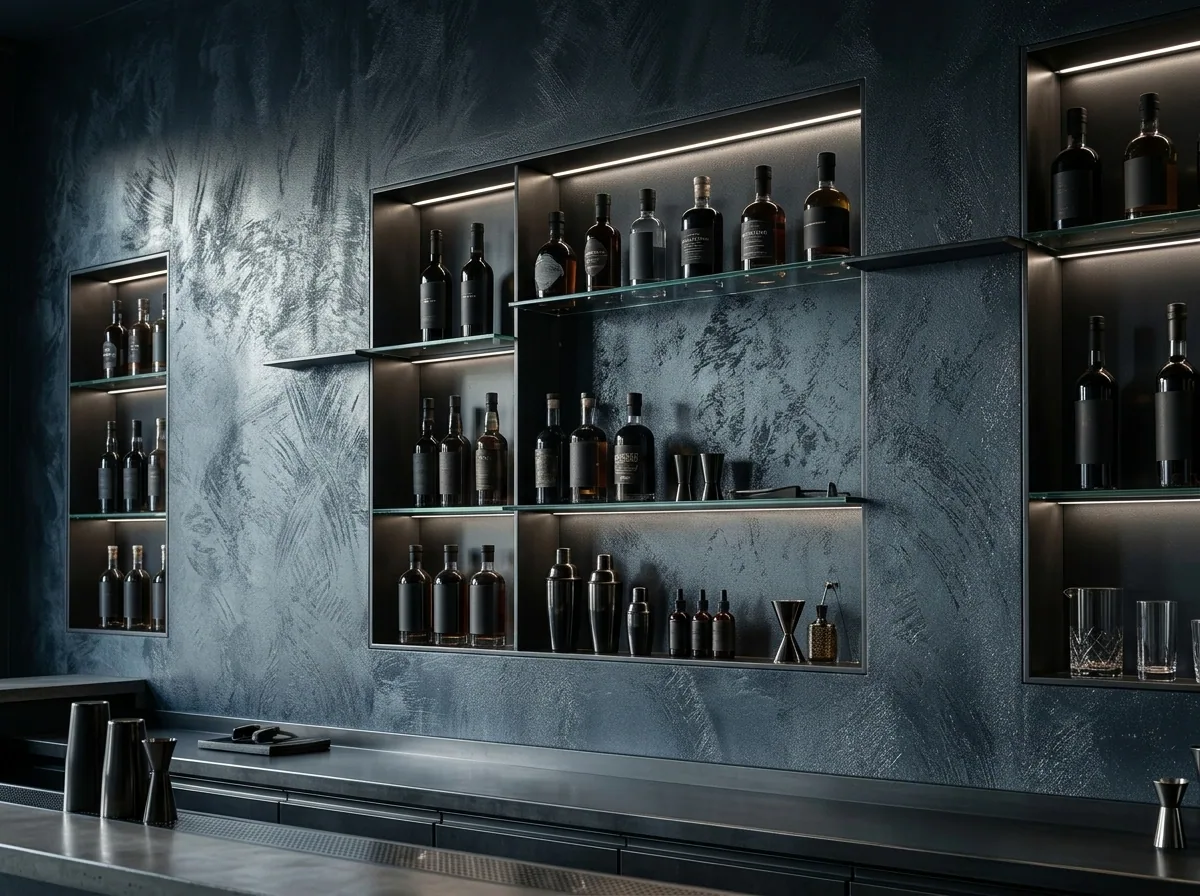
Approve pearl and metallic wall samples under the lighting the hospitality space will actually use. Review the daytime setting and the evening scenes, then record which sample was accepted for each wall. Keep the physical references and the lighting notes together for the applicator and the project team.
DecoPaint’s pearl finish has an iridescent, light-shifting appearance. Its metallic wall finish uses brushed direction and mica movement. Compare the proposed versions in place before deciding how much reflection belongs behind a reception desk, dining area or bar.
Review the scenes the operator will use
Ask the operator and lighting designer to identify the intended settings for the space. Include daylight where relevant, along with the lighting used during evening service. Note which fittings are on and which settings remain undecided.
Hold the samples upright against the proposed wall, or as close to it as practical. View them with the ceiling, wall and decorative lights intended for that scene. Check the surface from the front and from an angle, where reflection and application movement may read differently.
If the permanent lighting is not available, describe what was used for the review. Agree whether the decision is provisional and whether a further check is needed once the lighting is installed. A sample approval should make those limits clear.
Walk the guest route with the samples in place
Look from the entrance and from the positions where guests will sit or stand. At reception, review the wall from the arrival route and close to the desk. In a restaurant, include the seated view rather than judging the finish only while standing beside it.
A broad wall gives more space to see the movement. Shelves and doorways break that surface up, so show signage, artwork and fixed joinery on the elevation. Include the shadows those elements introduce in the sample discussion.
Bring the selected timber, stone, fabric and metal references. Hold them beside both finish samples under the same scene. Discuss the amount of sheen and visible variation you want, then identify which sample applies to each area.
Keep a decision sheet for each wall
Use the sheet to capture what the team actually reviewed. Separate accepted choices from the items still awaiting confirmation.
| Review item | What to record |
|---|---|
| Wall location | The elevation or area receiving the finish |
| Sample | Finish family, colour and physical reference identifier |
| Application character | Agreed brush direction or visible movement |
| Lighting | The scene and fittings used for the review |
| Guest view | The arrival, seated or close-range positions checked |
| Open items | Uninstalled lighting, unresolved edges or a further trial required |
| Acceptance | The authorised reviewer and the sample version accepted |
Where the wall is extensive or the lighting effect remains uncertain, discuss a representative trial area with the applicator. Agree what it will demonstrate and when it will be reviewed. Keep any resulting change attached to the updated sample reference.
Resolve preparation and edges before application
Have the team assess patch repairs and hairline cracks, with lighting cut-outs and adjoining cabinetry. Reflective finishes can make uneven preparation and rough edges more noticeable. Agree where the finish stops and whether the detail needs a trim, shadow gap or another defined termination.
The applicator should confirm the preparation and final treatment for the proposed system. Review the completed sample with any treatment included in the proposal, and obtain the relevant care instructions. Let the operator review those against the intended cleaning arrangements before acceptance.
Keep photographs for sharing the decision, but retain the physical samples for comparison. Exposure can change how reflective surfaces appear in a photograph. Label replacement samples clearly so the site team can identify which reference supersedes an earlier version.
Bring the lighting plan and intended operating scenes to a DecoPaint sample review, with the material board and marked wall elevations. Identify who will accept the finish for the project. The review can then settle the appearance and leave any remaining lighting or detail decisions clearly assigned.